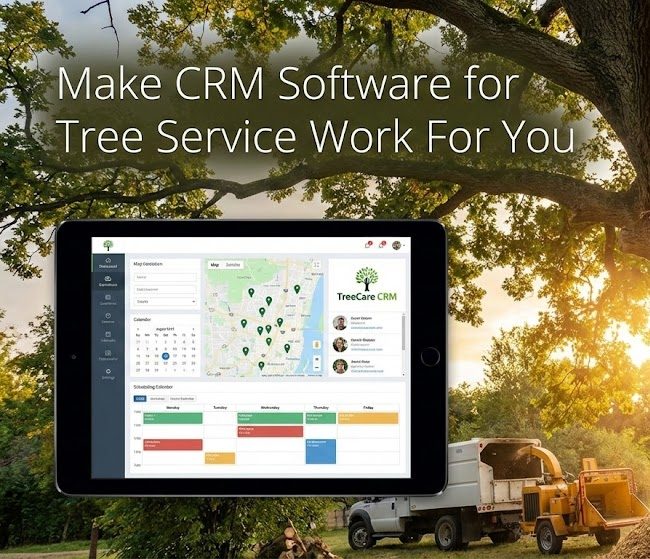


Are you buried in phone calls, trying to figure out where your crews are? Do you spend nights catching up on paperwork instead of relaxing? If you’re nodding along, you know the chaos that can come with running a tree service business.
Many owners think working harder is the solution. More hours and more stress just lead to burnout. The real secret is to build systems that prevent fires, which allows you to escape the daily grind and build a company that runs smoothly.
Your current tree service operations might feel like they are holding things together, but they are likely holding you back. Better care operations are not a distant dream; they are achievable with the right framework.
Got questions? We have answers. Schedule a short call with TreeCareHQ here.
Table Of Contents:
- Why Your “System” Isn’t Working
- The 4 Core Pillars of Smooth Tree Service Operations
- Pillar 1: Mastering Your Schedule and Job Management
- Pillar 2: Keeping Your Equipment Running Like a Dream
- Pillar 3: Get Paid Faster and Keep Customers Happy
- Pillar 4: Investing in Your Team’s Safety and Skills
- Conclusion
Why Your “System” Isn’t Working
Let’s be honest about the “systems” most tree service companies start with. Is your office a collection of sticky notes on the dashboard of your truck? Is your master schedule a whiteboard that gets erased by accident?
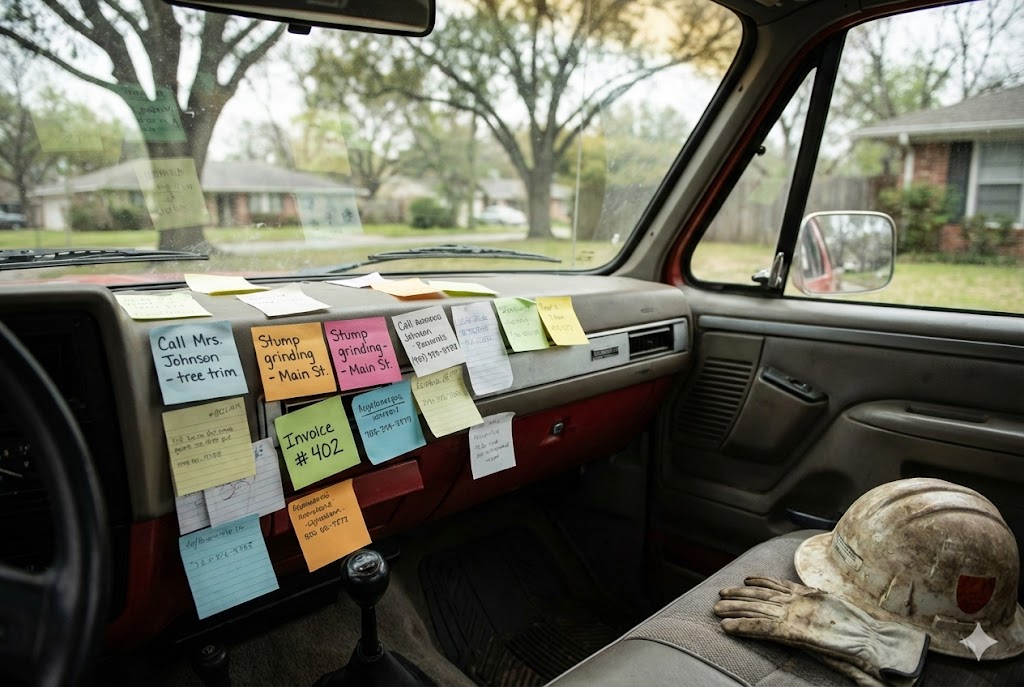
Maybe you use a massive group text to coordinate your crews. Messages get missed, job details are lost, and you spend half your day just playing telephone. This approach might work for a small business at first, but it crumbles as soon as you add a second crew.
This disorganization has real costs for tree service businesses. Wasted fuel from poor routing eats into your profits, and missed calls from potential customers go straight to your competitor. Crew morale plummets when they show up to a job without the right information or equipment, leading to high turnover and inconsistency.
The 4 Core Pillars of Smooth Tree Service Operations
Building a scalable, profitable business is about creating a solid foundation with four core systems. Think of these as the legs on a stool; without all four, the whole thing will wobble and fall. A solid business plan is built on these reliable pillars.
You need to focus on job management and scheduling first. Next comes asset and equipment tracking. You also need a process for customer communication and billing, and finally, a commitment to team safety and training.
By building reliable processes for these four areas, you will transform your business from a reactive mess into a predictable profit machine. Let’s break down how to get this done.
Pillar 1: Mastering Your Schedule and Job Management
Your schedule is the heartbeat of your business. If it’s messy and inefficient, everything else will be too. A jumbled schedule means wasted time, unhappy customers, and stressed-out crews, which is often the most painful bottleneck for service companies.
Relying on memory or messy spreadsheets is a recipe for disaster. Double bookings happen, jobs get forgotten, and your day is spent reacting instead of directing. It’s time to build a central hub for all your jobs.
Centralize Everything with Job Management Software
The first step is to get all of your job information out of your head and into one central place. Modern job management software is a game-changer for a tree service business. It acts as a single source of truth that you, your office staff, and your crews can access anytime.
Look for tools that offer a drag-and-drop calendar. This lets you see your whole week or month at a glance and easily move jobs around. Good software also gives your crew job details for tree trimming or tree removal, notes, and even photos right on their phones, so they arrive prepared.
Businesses using field service management tools see major boosts in efficiency. According to one report, companies see an average increase in technician productivity. That’s like getting an extra day of work out of your crews every week, without the overtime pay.
Smart Routing to Cut Costs and Boost Efficiency
How much time do your crews spend just driving around? Without a plan, they can end up crisscrossing your service area all day long. This wastes an incredible amount of fuel and billable time.
Route optimization software can automatically plan the most efficient routes for your crews. It groups jobs by location so your teams spend more time working and less time behind the windshield. This directly impacts your bottom line every single day.
For example, you could have three jobs in one part of town scheduled for Monday, Tuesday, and Thursday. A smart system would group all three for Monday, saving you two extra trips. A study from Verizon Connect highlighted that route planning can significantly reduce fuel costs and drive time, putting real money back in your pocket.
Pillar 2: Keeping Your Equipment Running Like a Dream
You have probably lived this nightmare. The crew is on a big removal job, the crane is in place, and one of the main chain saws won’t start. Now you have an entire crew standing around, a frustrated client, and a massive, expensive problem to fix.
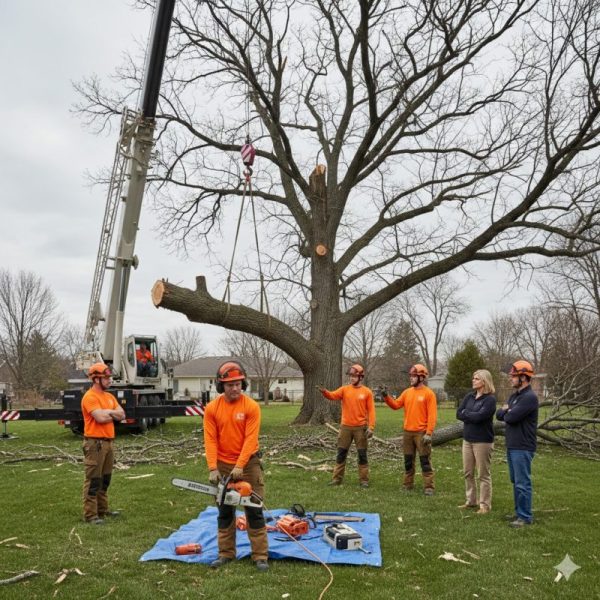
Equipment downtime is one of the biggest hidden killers of profit in the tree care industry. Many owners treat equipment maintenance as an afterthought. Waiting for something to break is always more expensive than preventing it from failing.
A proactive approach to maintenance keeps your teams working safely and efficiently. It protects your expensive assets and builds your reputation as a reliable company. Good tree care operations depend on reliable tools.
Proactive Maintenance vs. Reactive Repairs
There is a huge difference between proactive maintenance and reactive repairs. Reactive repairs are expensive emergencies. Proactive maintenance is a planned, predictable business expense that is a core part of your operations.
Think about it like this: changing the oil in your chipper costs a little bit of time and money. Rebuilding the engine because you ran it without oil costs thousands of dollars and days of lost work. Being proactive gives you control.
The Occupational Safety and Health Administration (OSHA), one of several federal agencies focused on worker safety, also emphasizes regular equipment inspections for job safety. A good maintenance program doesn’t just save you money; it protects your most valuable asset—your people. It’s a foundation for all safe work practices.
Creating a Simple Equipment Tracking System
You do not need a fancy, expensive system to track maintenance. You can start with a simple spreadsheet or a dedicated app. The important part is to be consistent with your recordkeeping requirements.
Here’s what you should track for each piece of equipment:
- Equipment Name and Serial Number.
- Date of Purchase.
- Last Service Date.
- Next Scheduled Service Date.
- Details of Service Performed (e.g., oil change, new spark plug).
- Person Who Performed the Service.
You can also create simple daily checklists for your crews to inspect their personal protective equipment. Before they leave the yard, they can do a quick walk-around of their truck and other protective equipment. This simple habit can catch small problems before they become big, job-stopping failures.
| Equipment | Monday | Wednesday | Friday |
|---|---|---|---|
| Chain Saws | Clean Air Filter | Sharpen Chain | Inspect Bar & Sprocket |
| Wood Chipper | Check Fluid Levels | Grease Bearings | Inspect Blades for Damage |
| Stump Grinder | Inspect Teeth | Check Hydraulic Fluid | Clean Debris from Unit |
| Truck & Trailer | Check Tire Pressure | Inspect Lights | Test Brakes |
Pillar 3: Get Paid Faster and Keep Customers Happy
The job is not done until the money is in the bank. Yet so many tree service owners make getting paid incredibly difficult. Paper invoices get lost, checks take weeks to arrive, and you waste time chasing down payments.
At the same time, customer communication often stops the moment a job is scheduled. This leaves your clients feeling uncertain and anxious. Improving your invoicing and communication processes can radically change your cash flow and customer satisfaction.
The Shift to Digital Invoicing and Payments
Moving from paper to digital invoicing is one of the easiest ways to improve your business. Digital invoices look more professional, they cannot get lost, and they let you get paid much faster. Your customers can get their bill via email and pay it online with a credit card in just a few clicks.
Accounting software or industry-specific tools can automate this whole process. You can create an invoice from your phone before you even leave the job site. Reports show that businesses using online payment solutions get paid nearly twice as fast as those who do not.
Faster payments mean better cash flow. This gives you the money you need to make payroll, buy fuel, and invest in growing your business without stress.
Using a CRM for Great Customer Communication
A CRM, or Customer Relationship Management system, might sound complicated, but it is not. Think of it as a digital file cabinet that organizes all your customer information. It keeps a history of every job, every quote, and every conversation you have had with a client.

A good CRM does much more by automating your communication. You can set it up to send automatic reminders a day before a job or a quick follow-up text when your crew is on their way. It is a simple way to improve the customer experience.
After the job is done, it can automatically send an email thanking the customer and asking for a review. Building a collection of positive online reviews is powerful for attracting new business. Data shows that most consumers regularly read reviews for local businesses, helping you stand out from the competition with very little effort.
Pillar 4: Investing in Your Team’s Safety and Skills
Your team is your greatest asset, and their safety is paramount. Strong occupational safety practices are not just about compliance; they are about building a resilient and professional crew. A formal training program protects your employees and your business from risk.
This includes everything from proper equipment handling to protocols for working near power lines. When your team is well-trained, they are more confident, efficient, and safer on the job site. This pillar is critical for the long-term health of your company.
Developing a Formal Training Program
A structured training program sets clear expectations for safe work. You can create your own or leverage existing resources. OSHA offers an outreach training program where workers can earn 10-hour cards to certify their basic knowledge of job site safety.
This kind of OSHA training provides a strong foundation for your team. You can find qualified trainers through the OSHA Training Institute Education Centers. The training institute offers courses on many key topics relevant to tree care operations.
When seeking training, be sure to use reputable education centers to avoid card fraud. You should verify the credentials of any trainer to protect your investment and your team. Your local OSHA office can offer guidance and help you avoid card scams.
Leveraging External Resources and Assistance
You do not have to develop your safety programs alone. Federal agencies provide numerous small business resources. For instance, the Susan Harwood Training Grants program funds non-profits to provide safety and health training for workers in high-hazard industries.
OSHA also offers free consultation services to help small businesses identify hazards and improve their safety and health programs. Compliance assistance specialists can provide information and guidance without penalties. These cooperative programs are excellent business resources for any small operation.
You can find fatality reports or use an establishment search on their website to understand common risks in the industry. They even provide resources like a job safety and health poster, news releases, and the QuickTakes newsletter. Some materials are available in multiple languages, such as Haitian Creole or Spanish (información rápida).
Creating a Culture of Safety and Support
A safe workplace goes beyond checklists and certifications. It requires a culture where every team member feels responsible for their own safety and the safety of others. This includes open communication about hazards and supporting employee well-being.
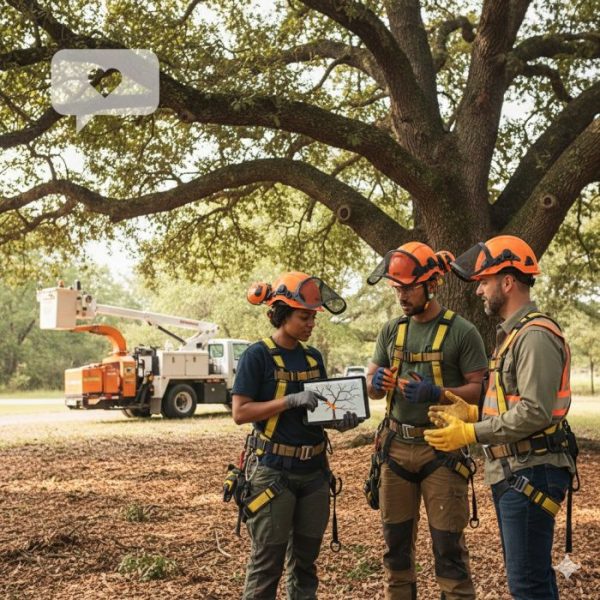
It’s important to discuss mental health topics and provide resources for issues like suicide prevention, as tree care can be a high-stress occupation. Promoting strong health programs shows you care about your people as a whole. You must also inform your employees of their whistleblower protections, ensuring they feel safe reporting concerns without fear of retaliation.
By making job safety a core value, you reduce accidents, lower insurance costs, and build a reputation as a responsible employer. This attracts better talent and builds a stronger foundation for your business. It is a critical component of any successful operation.
Conclusion
Transforming your business from a source of stress into a well-oiled machine will not happen overnight. You do not need to change everything at once. The best approach is to start small and build momentum.
Pick one area—your scheduling, equipment maintenance, customer communication, or safety training—and focus on improving it this month. By systematically improving your tree service operations, you take back control. You build a stronger, more profitable company and create more freedom for yourself.
A focus on these essential tree care operations is the only way to build a business that serves you, not the other way around. With these four pillars in place, you will be on the right path to sustainable growth and long-term success.
Ready to take your tree business to the next level? Schedule a short call with TreeCareHQ here.